
Airport: district heating pumps and an air handling unit
A pilot on three machines that an airport depends on every day. PRECOG learns how each machine normally vibrates and shows when its condition changes.
Airport
Goal of the pilot

Pumps and ventilation run around the clock at an airport. When one of them fails, the operation of a whole building can be affected. The pilot shows, on three machines, that the sensor data can establish a stable baseline, detect changed mechanical behaviour and give useful maintenance information.
PRECOG only observes. It sends no control commands, it does not replace the protection of the machine and it does not order maintenance automatically. It gives people earlier information about the condition, and they decide what to do.
Equipment
Monitored equipment
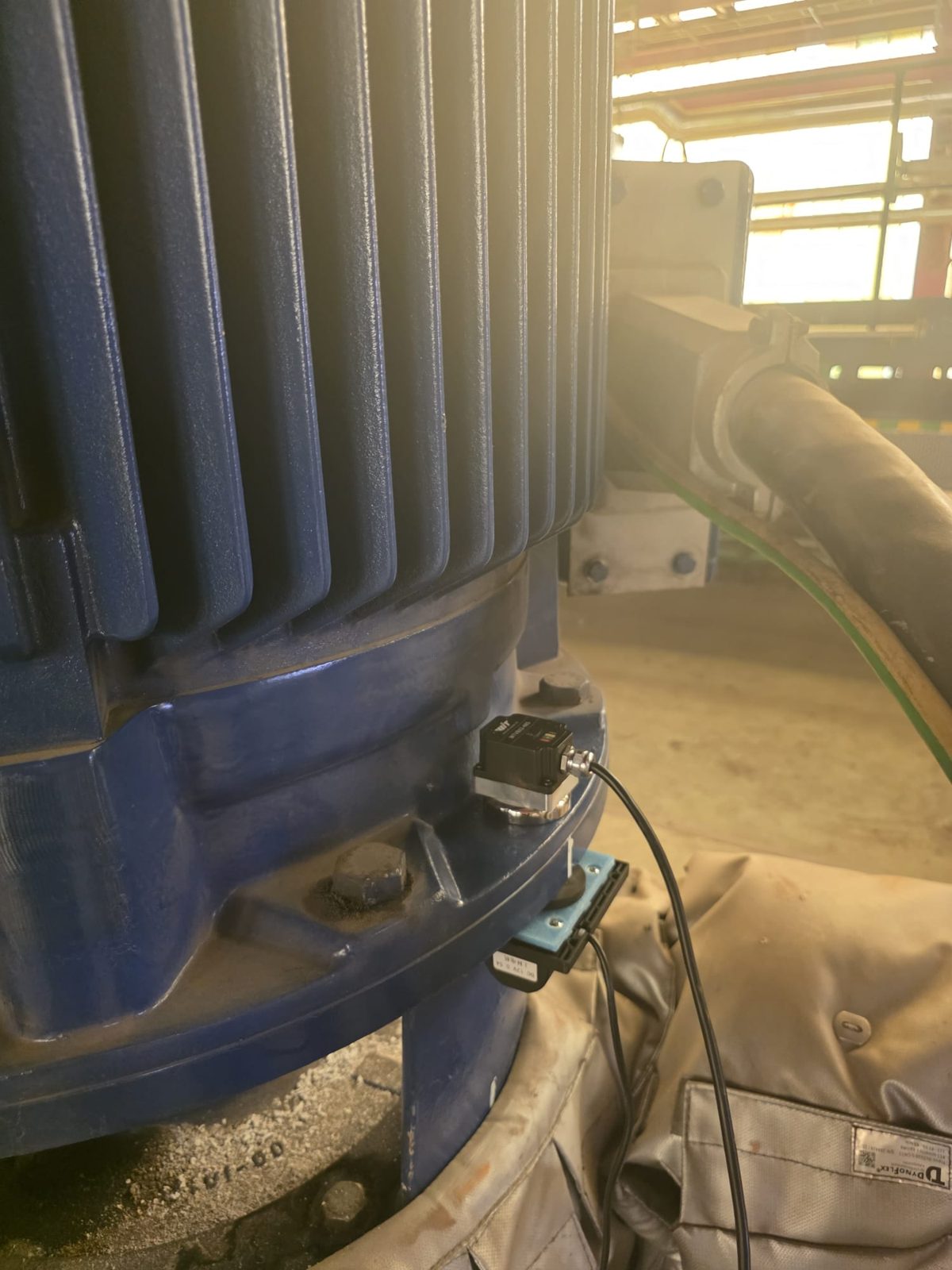
A pump from Svanehøj, type IFV 150-TL, with a flow of about 550 m³/h and a speed of about 1,965 rpm. The motor is from ABB, with a power of about 200 kW. The aim is to follow the vibration and the bearing condition of the motor and the pump.
A pump of the same machine class as pump 1. The two pumps can be compared with each other, which shows differences and trends more clearly.
A fan motor from Ziehl-Abegg, type ZAPE 280M-6/PHE, efficiency class IE3, with a power of about 55 kW at about 985 rpm. Two Danfoss frequency converters of 55 kW and 22 kW drive the unit. The aim is to follow the motor, the drivetrain, the fan and the bearings.
Measurement
What is measured
PRECOG measures the vibration of the motor housing and the status of the sensor. The pressure of the district heating system and the digital data of the drives are outside the pilot.
The analysis looks for patterns that point to:
- bearing degradation
- imbalance and misalignment
- looseness and changes in the drivetrain
- changed fan behaviour
- vibration changes on the pump side
The sensors must sit rigidly and close to the bearings. The thermal exposure of the mounting place is checked on site, because the district heating environment is hot.

Data path
From sensor to dashboard
- Measurement. The sensor delivers vibration and status values at the motor.
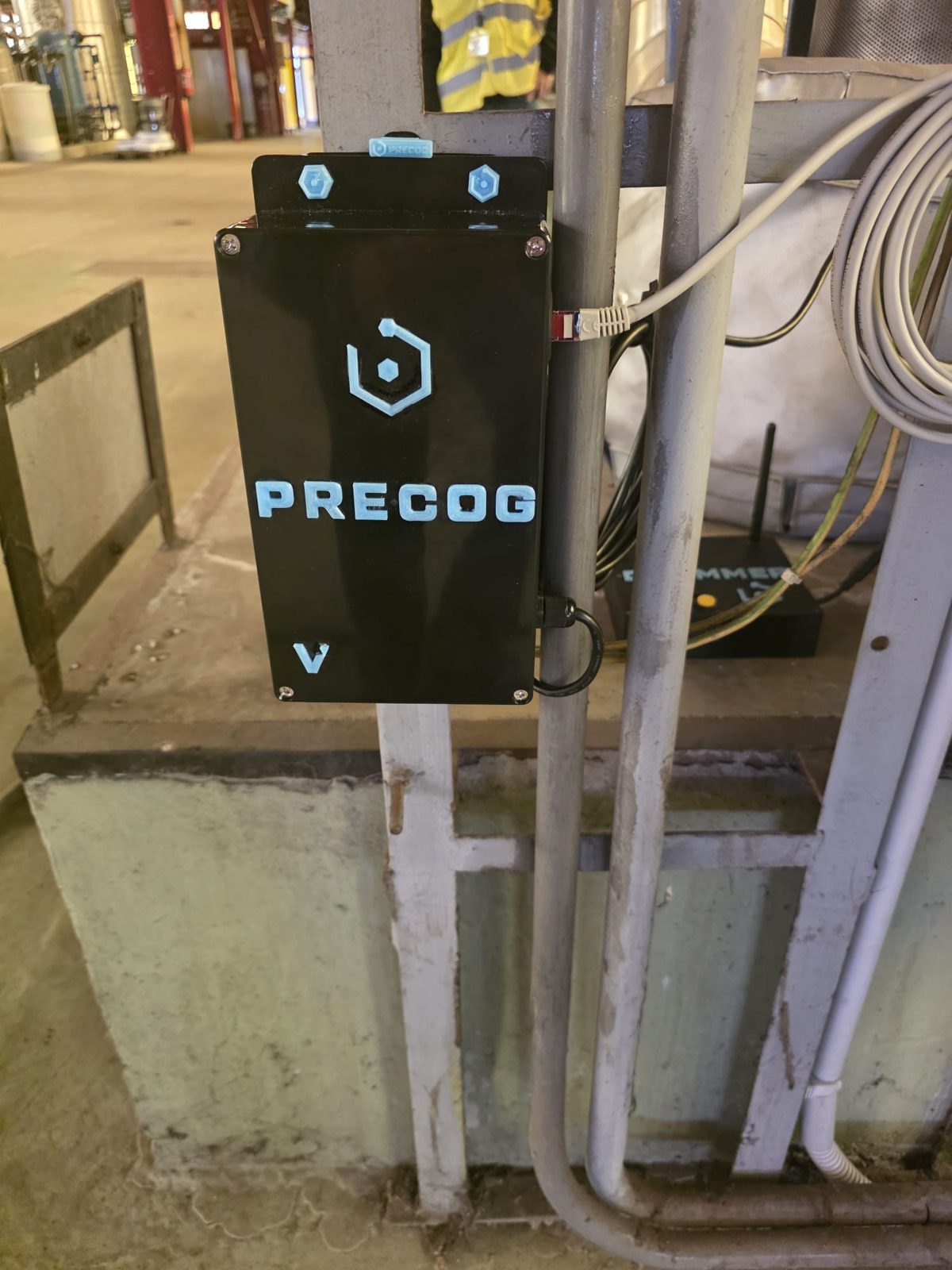
- Collection at the edge. A small industrial unit next to the machine checks the values, adds a time stamp and a sequence number and packs them.
- Network and power. A wired Ethernet connection carries the data, and the same cable supplies the power.
- Transfer. The unit sends the data to the PRECOG API over an outbound HTTPS connection, with machine authentication.
- Analysis. PRECOG builds a baseline for each machine, follows the trend and detects anomalies. The AI layer classifies an anomaly only when the statistical layer finds a relevant deviation.
- Dashboard. Authorised users see the condition, the anomalies and the maintenance information in a browser.
Delivery without data loss
If the connection to the API is lost, the unit stores the records in its own memory and uploads them in order when the connection returns. A record counts as delivered only after the API has confirmed it. Each record has a device identifier, a time stamp and a sequence number, so missing, duplicated or out-of-order records can be detected, and a repeated upload does not create duplicates.
The time stamps need a reliable time source. The preferred design uses the time server of the airport itself.
Data and security
Data and security
Only anonymous technical telemetry leaves the site. A package contains the vibration and status values, a time stamp, a sequence number and a device identifier that describes nothing. It contains no personal data, no images, no audio and no business documents, and no machine name, serial number or exact location.
Communication
HTTPS with TLS 1.2 or later, machine authentication with a signature (HMAC), server-side input validation and outbound-only connections from the units.
IT requirements
The cloud, network and security requirements of the airport IT department were answered point by point before the pilot started.
More about the security design is on the security and IT architecture page.
Next step
From pilot to on-premises
During the pilot, the application runs in a temporary cloud operated by Vida Soft. After the pilot, the application, the API, the analytics, the database and the dashboard move to a server of the airport. The units then reach only the local API and the internal time server. Normal operation needs no internet connection and no permanent permission for a cloud service.
Do you have pumps or air handling units that you would like to monitor?